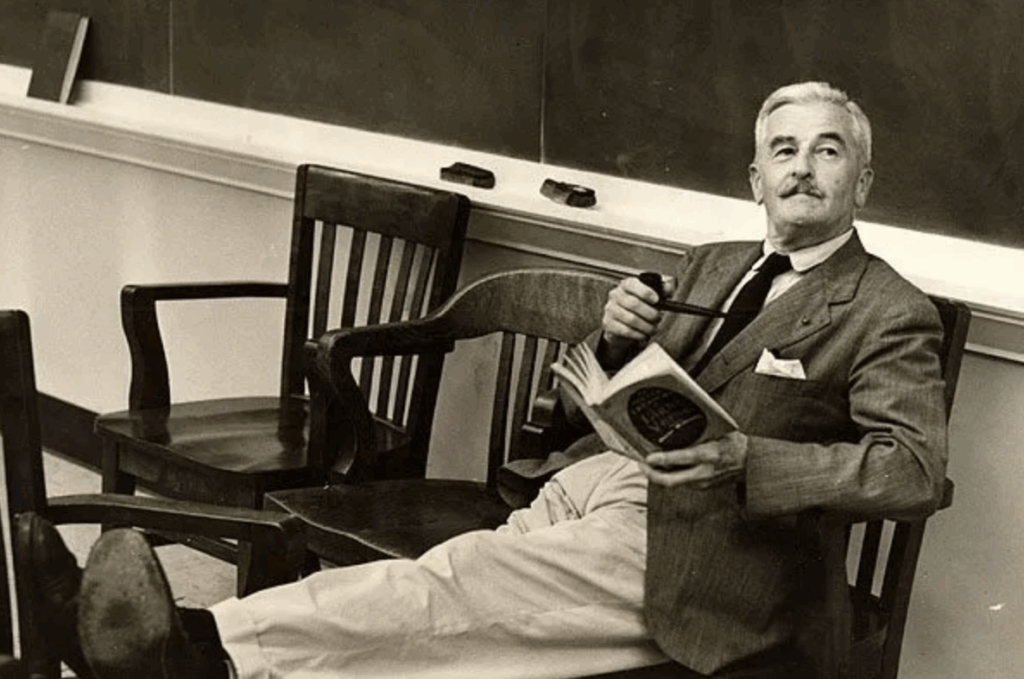
William Faulkner won the Nobel Peace Prize for literature in 1949. Two years earlier in 1947 he spoke to students of the English Department at the University of Mississippi. During a question and answer session after the talk, he handed down some advice to the students on how to be better writers. Here’s an excerpt from one of the answers:
“Read, read, read. Read everything — trash, classics, good and bad, and see how they do it. Just like a carpenter who works as an apprentice and studies the master. Read! You’ll absorb it. Then write. If it’s good, you’ll find out. If it’s not, throw it out of the window.”
I’ve read this passage a hundred times in my life and something new always seems to glare up at me when I do. The core principles are always there however. The notion that reading is as important to writing as writing is to writing is something basic and true. Needless to say, at A Hundred Monkeys we agree with Mr. Faulkner. Here’s why.
We often say naming is our bread and butter. A majority of our clientele are in search of a name or renaming. They are starting a tequila company or need to rename their biotech startup after a cease and desist letter ruined their week. And for each of these projects we contractually promise 24 names divided into two rounds, with 12 names per round. Sometimes we spill over into a third round but rarely. So one of the questions we get asked the most is: where do you come up with names?!
We read them. Sure names can be conjured up by sitting and thinking hard enough. But often we trip over names, countless of them, in the lines of traditional Japanese ghost stories or an article about Brazil’s beef exports or the Wikipedia page about poison.
I’m sure everyone who works at A Hundred Monkeys has a notebook filled with stolen words and names from years of reading. I have a Google Doc with thousands of words that have come from reading everything from Brontë to billboards. We’re collectors and words are what we prize the most.
Interestingly, there’s little connection between where we pick up a name and where we put it down. During a naming project for an EV battery, we might find ourselves wading through the history of electric power or learning about the scientific and physical laws that govern the operating function of a battery. But it’s possible that we propose a name to a client that came from a blueberry scone recipe.
I think this is what Faulkner means when he says to read “trash, classics, good and bad”. He suggests looking around you at the language of the world both high- or lowbrow, and taking it all in. As a namer, I take this to mean that there are good names in trash tabloids and the New York Times. Both stand on equal footing.
Collecting words is also a more conscious way of naming. Like looking in a toolbox for just the right screw, we thumb through a notebook to find the right word for the right occasion. But Faulkner refers to something more subtle and unconscious in his quote–the absorption of language.
Here’s the unconscious way of naming.
At A Hundred Monkeys we ingest words as much as we collect words. We ingest them during reading then metabolize them in the hopes that it will make us better writers, namers, and creatives. Perhaps this is a more holistic and intangible approach to naming, as if naming from the inside out, but it works just as well.
I think both approaches are adequate ways of being creative with language, especially when someone is paying you to do so and there’s a deadline looming. In the end, we simply enjoy words and keep them around so they will be at the ready when we need them.
And we always need them.