Branding for the Head and the Heart: An Interview with Made of Millions’ Esther Fernandez
Passion projects are a hot topic around here. We often daydream about which companies or products we would be enthusiastic to name from minor league sports teams to hammocks. Even though we mostly concern ourselves with working with kind and communicative folk, we all individually hope that our one dream project comes in the door. Mine is working with a mental health brand.
I admittedly have grappled with poor mental health most of my life so it’s not surprising that I would want to help people helping people with mental disorders. Although we’ve worked with some wonderful mental health companies in the past, I still admire well-branded mental health brands from afar—one of which is Made of Millions, a mental health advocacy nonprofit “on a mission to change how the world perceives mental health.”
I was lucky enough to chat with Made of Millions Senior Copywriter, Esther Fernandez about mental health advocacy work, brand intentionality, and honesty in messaging.
Patrick Keenan: Hey you’re the person on the Made of Millions social media page!
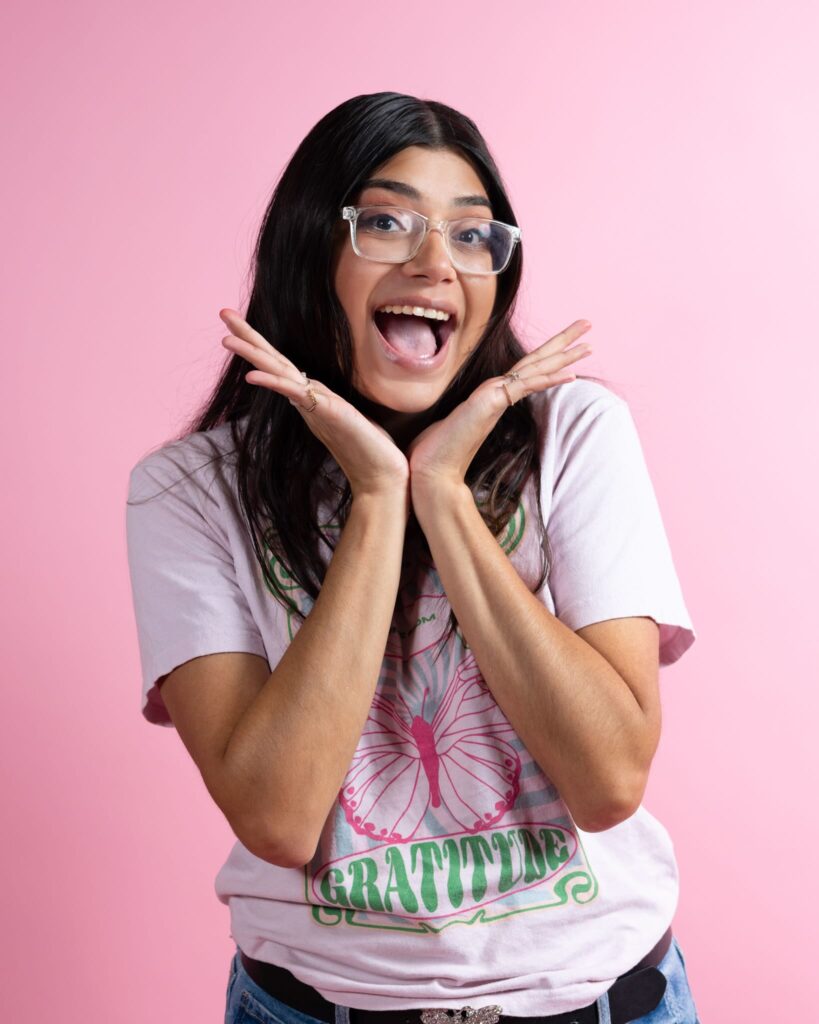
Esther Fernandez: Yep, I am in charge of the socials. It’s funny because people will set up meetings like this and then I’ll pop up and they’re like, “It’s you! You’re that girl that I see on Instagram!” I’m like, “Yep. I’m the nameless face from Made of Millions that you see popping up in your feed”.
PK: That’s a good place to start. Tell me about Made of Millions.
EF: Usually when I talk about Made of Millions, I like to start with our inception which is back when our Executive Director Aaron Harvey was really young. He started getting debilitating intrusive thoughts. Scary thoughts like “what if I harm someone” and a lot of sexual intrusive thoughts or religious intrusive thoughts.
He had no idea what they meant and struggled with them for decades. He finally got to a point where he became pretty non-functional with substance use and suicidality. It was super, super heavy.
At the same time, he was also big in the marketing world. He was living in New York and running an ad agency. So he was kind of living this double life of being super good at marketing but also struggling with these debilitating thoughts. Then one day he reached his breaking point, went onto Google, searched for violent thoughts, and then information about OCD came up.
Coming from a marketing background, he thought it was ridiculous that this information wasn’t more accessible to people. So he really honed in on SEO and created a website called intrusivethoughts.org. That’s what we were originally called.
His team was like, “okay, there seems to be a lot of things that people get wrong about mental health in general.” So then we rebranded as Made of Millions and our name represents the millions of people who struggle with mental health every day. And we leverage a lot of digital tools, art, storytelling to make mental health as human as possible.
PK: Thanks for sharing. What a story.
EF: Yeah, everyone on our team struggles with mental health or knows someone who struggles with mental health.
I found Made of Millions because I also struggled with OCD but never knew that I had it until the pandemic. When I searched in Google, Made of Millions was one of the first resources that popped up. And then I ended up joining the team. We had a following on social media like Instagram but I really honed in on shortform video and TikTok when that was blowing up. Now our TikTok has the largest following. I think it’s like 350,000.
PK: I’m curious to know if rebranding to Made of Millions from intrusivethoughts.org was because the latter might lean a little more towards OCD than other mental health disorders.
ESTHER: Sadly, I wasn’t around for that. I came right after the rebrand but intrusive thoughts aren’t specific to OCD. Anyone can have an intrusive thought. They’re really common with PTSD or generalized anxiety. I think the move was more towards capturing mental health in general.
We like to tackle a lot of super taboo topics. I think on our social pages right now, the videos that gain the most traction are about things like suicidality or mania or intrusive thoughts.
We tend to be like, “what are the symptoms or conditions that people tend to kind of shy away from? And how can we bring those to light?” I can understand how people would want to engage in that content because it’s so rarely talked about.
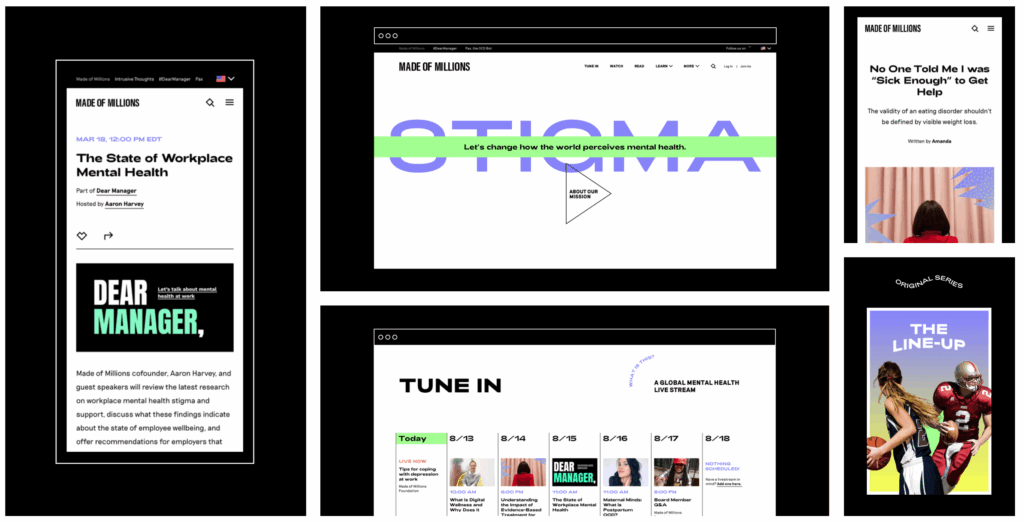
PK: You talked about it a little bit but your website says “we created an organization dedicated to using modern tools to address our mental health crisis, design technology, videography, social media, and relatable writing”. Can you tell me how design and relatable writing have helped address the mental health crisis?
EF: I think so much of that comes from Aaron’s background. He ran a digital agency, and built Made of Millions with other designers, creators, and writers who understood how to marry advocacy with art/creativity.
We have beautiful brand decks with things like a color scheme that’s supposed to be accessible in terms of eyesight. And we try to make the branding gender neutral. A lot of what drives our branding and marketing is really just the idea of accessibility and who needs to hear this the most and how can we reach them.
I think that’s why we’re also really passionate about short form videos. I think it’s so powerful that you can make a short video and it can land on someone’s feed and teach them about mental health.
We get comments all the time being like, “Oh my god, I didn’t even know that this was OCD!” Or, “I didn’t know this treatment existed but this video landed on my page and I can’t believe that’s even a thing.”
Another thing is that I think when we’re approaching the mental health space and when we’re seeing what’s missing, a lot of the time mental health can be branded as too clinical. Even simply the language people use.
It’s just like you’re using a lot of words that people might not entirely understand. Even the websites can seem old and clunky. Mental health branding and design can often feel really complicated, cold, and corporate. When in reality, when you think about it, mental health is the most human thing ever.
And the way that we understand metaphor and language affects how we can better empathize with one another. So I think something that we always try to prioritize with our content or with our website or whatever is just making sure like, is this human? Is this relatable? Can people connect to it on a deeper level?
PK: What are some other things that you found with branding that have helped make you feel more relatable or human to your audience?
EF: Oh my gosh. I think being super honest and not being afraid to talk about stuff. It’s important to us to talk to people in a way that doesn’t seem like we’re beating around the bush. We want to be honest and clear and concise with our messaging. I think that really helps people a lot.
It’s funny because me and my coworker just had this conversation about how in the mental health space, it feels weird how these super big organizations approach kind of heavy topics. It’s a bit sanitized. But I think people want to hear it straight, like they want to read copy that’s like “Yeah things suck. We see you. You’re validated.”
Even if we’re talking specifically to people in the OCD world, sometimes they just want to hear someone say, “Yeah OCD is painful and it sucks and we’re here for you.” We always ask ourselves: “What would 12-year-old us want to hear? What would 12-year-old us understand?” I think we try to really understand the more human side of mental health and make it a priority to communicate that with our brand.
Visit madeofmillions.com to learn more about mental health and mental health advocacy.