Good names make you feel something
They get a reaction—a smile or a raised eyebrow.
This reaction creates an opportunity for you to show people the difference you can make in their lives.


A name is a small package.
A word or two, a short phrase at most. We work collaboratively to understand the competition, context, and opportunity, in order to learn how the name can be most impactful.
Naming is a process.
A lot of factors go into selecting a name and it’s our job to make sure things like trademark screening, URL acquisition, and cultural checks are addressed thoughtfully and in the proper order.
Names are living things.
They take on meaning as people experience your brand. We want to set you up to make a good first impression, one that only grows and deepens over time.
Naming is often a group activity.
We often joke that about 20% of our job is generating names. The other 80% is getting a group of people to make a subjective decision together. Learning how your team thinks and makes decisions is an essential part of the naming process.


Naming is our life’s work.
Our team of six has 65 years of naming experience at A Hundred Monkeys. We’ve done over 600 projects for clients big and small on all inhabitable continents. We’re still waiting to hear from the Antarctic Research Station.
GRADIENT is the answer to the window AC units of yesteryear: the thunderous, leaky, inefficient eyesores that dot the skies of every major city. Beyond heating and cooling, Gradient is about holistic comfort. It’s a name that captures the flexibility and fluidity of this low-carbon AC unit, which blends into its environment as easily as a window sill.

We interviewed their CEO, CTO, and Head of Product to understand the impact of this system on an individual’s environment, and the environment. While there was still some love for the original name (TREAU—or, Thermodynamics Rules Everything Around Us), we delivered the final name after just one round of naming.
We conducted a preliminary trademark screening in the US, and Gradient came back with only minor potential conflicts. After deeper legal clearance, they were able to move forward with registration.
URL wasn’t a driver of the project, and the team was open to prefixes and suffixes. They were able to secure gradientcomfort.com.
Initially, Gradient wasn’t a frontrunner—but after sitting with it for a few weeks, they couldn’t imagine any other name. A good legal screening and some positive peer feedback helped seal the deal.
FIGURE 1 (stylized as Fig. 1) is a skincare brand borne out of a commitment to the scientific method. The name is a reference to, well, reference—specifically graphs or images in an academic text. Figure also alludes to the human face as well as the simple logic of figuring something out.
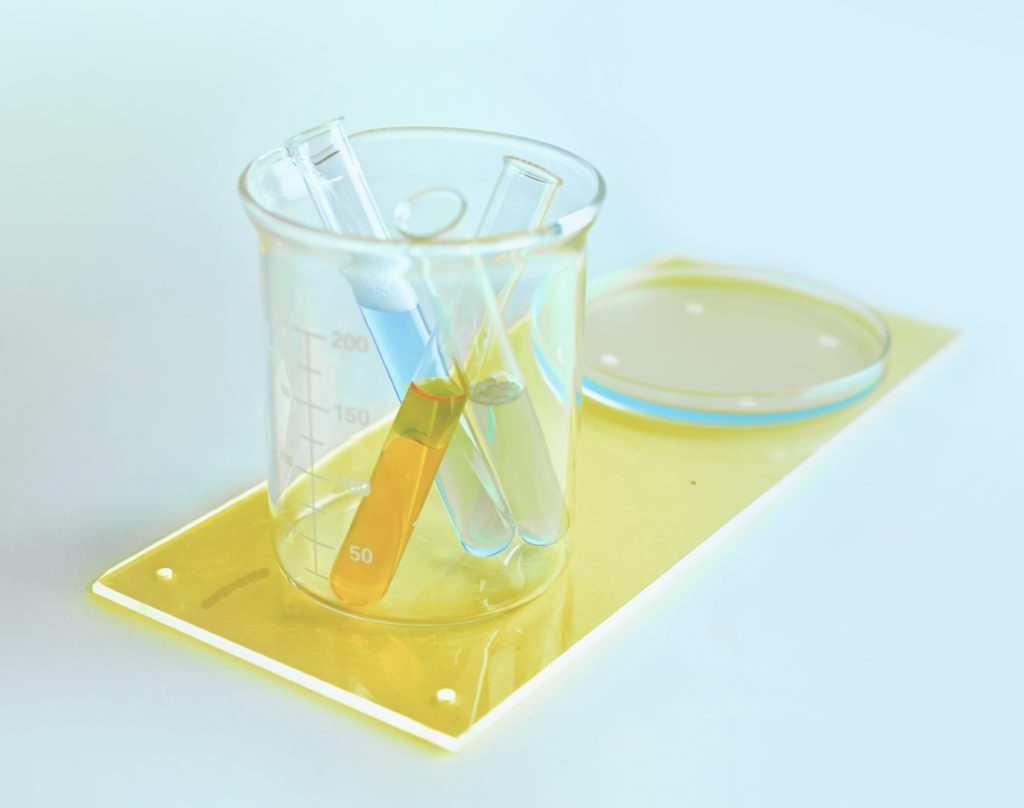
We interviewed their team, which included (but was not limited to) an esthetician, a Chief Medical Officer, and a Head of Chemistry—essentially the Avengers of skin health. This told us everything we needed to know about this group’s priorities, and ultimately, the ideal naming territory.
The beauty space is incredibly crowded, but this client was eager to deviate from all of the “clean science” tropes and beauty cliches. We conducted a preliminary ™ screening in the U.S. and passed with flying colors.
URL was not a driving factor here (they were prepared to use suffixes like “beauty” or “skin”), but they were ultimately able to acquire fig-1.co.
Figure 1 was one of many favorites from the first round of naming. In our second round, we explored more names like it, eventually arriving at a strong list of six contenders. In our minds as well as theirs, Fig. 1 was a clear frontrunner for its multilayered meaning and its undeniably appealing brevity.
MINERAL is a foundational building block of life—it speaks to the necessity of the computational agriculture platform the team is building. It also suggests the nutrients and rich soil needed to grow healthy crops. Finally, Mineral is about data collection and the resulting insights of that information.
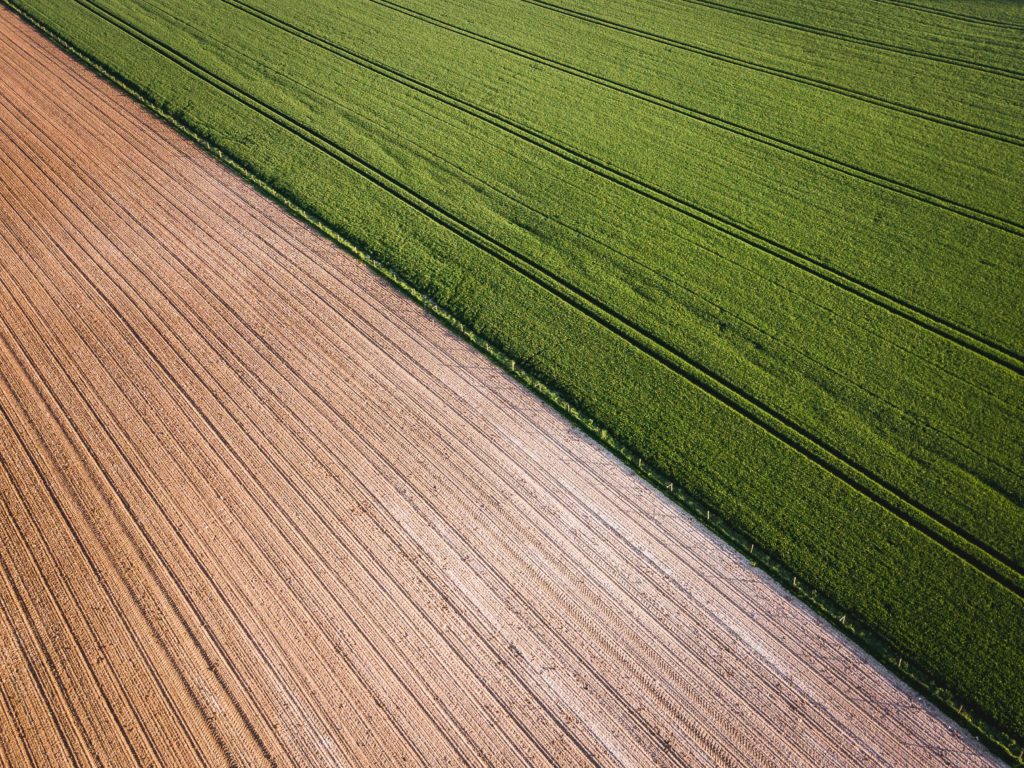
We worked directly with the leadership team in order to understand the challenge, the competitive landscape, and the roadmap. This put us in a position to figure out how we could have the most impact and lead into a story the team would be proud to tell. Working with the Mineral team was a dream project for us.
While incubated at X, the name needed the ability to stand on its own and be registered. Hardware and software always make trademark difficult but the specific agricultural application here made finding a registrable name less arduous.
Not a driving factor here. If Alphabet uses abc.xyz, their subsidiaries aren’t going to be stubborn about dot coms.
Mineral was presented in our second round of work. While the name quickly rose to the top for the team, we kept the focus on a small group of contenders until we were all certain Mineral was cleared legally.
MIRO is an excuse to think of your workday as a collaborative canvas. Derived from Joan Miró, the Spanish painter and sculptor who painted bright, bold murals of surreal amoebic forms. His vibrant, energetic work was a perfect metaphor for bringing ideas to life. Miro can also be considered as an empty vessel name with a connection to the Spanish word for “look” or “watch.”

When we began the project, Miro (then RealTimeBoard) had offices in San Francisco, Amsterdam, and Perm. We were lucky to be able to meet with the majority of the team in San Francisco to demo the product and work through our intake process. The team wanted a short, unmistakable name that spoke to creativity and visual collaboration.
Names were screened in the US and EU.
Not a project priority but the team was able to acquire miro.com
After legal review, we met with the leadership team in San Francisco and worked through the final contender names one by one. It rarely happens this way but we actually made a decision as a group, in the room.
Our Names
We’ve named just about everything under the sun. Have a look here.
The Competition
A lot of folks list naming as one of their services. See what they have to say.