
What you’re giving up by chasing a name that does it all
No matter how hard you try, a name for your company or product or service can’t do everything. So if you’re looking for a name that’s short and legally available and descriptive and memorable, you’re using 90% of your energy to get 10% of the benefit. Your name is a powerful branding tool and every unnecessary hoop you make it jump through weakens its impact.
Names can’t do all of these things because they are literally quite small. They’re almost always one to three words, and if the vast majority of our clients are to be believed, shorter is always better. That’s not enough space to describe what you do, and be memorable, and trademark-able, and searchable, and so on. It’s just too much to ask of six letters.
Now, I didn’t write this piece to help you figure out what your name should focus on. If that’s what you’re looking for, my naming workbook, Don’t Call It That, will get you there. I wrote this piece to explore the specific tradeoffs of prioritizing certain objectives. What do you lose if you really want a short name? What are you giving up if you’re dead set on having a .com?

Let’s start by looking at the practical objectives our clients and potential clients at A Hundred Monkeys are looking for most:
1. Available .com URL
2. Short and memorable
3. Completely clear trademark
4. Pronounceable and spell-able
5. Descriptive
6. Engaging
1. Available .com URL
To an older, more conservative crowd, having a .com URL without prefixes or suffixes is very important. If you run a bank, wellsfargo.biz doesn’t really have the caché you’re looking for. Fortunately, anyone who isn’t trusted with billions of dollars of other people’s money doesn’t really have that concern. Don’t believe me? Alphabet (market cap $714B as of writing) uses abc.xyz. They don’t even have their name in their URL. Tesla had launched three models of cars before acquiring tesla.com. The examples are numerous. People find you via search and links, not typing in your URL. Simply put, having an un-appended .com will not hamper your success.
So what do you lose by prioritizing URL? Almost everything. As we all know, basically all URLs that are words in English are taken. So for starters, anything obvious is out of the picture unless you have a big budget to acquire a domain. This is not money well spent. If you aren’t looking to splash the cash, then you’re letting domain search drive your creative process. This is the needle in a haystack approach that has led to the majority of the bad names and naming trends — vowel dropping, misspelling, wordsmash. Essentially, by prioritizing URL, you make it harder for everyone to deal with your name IRL (in real life). So, for example, if your name is CTRL, your name is actually “C T R L, control without any of the vowels.” So you might think you have a four letter name but in actuality you have a seven word name. No vowels, mo problems.
2. Short and memorable
Let’s nip this one in the bud. “Short and memorable” is a contradiction in terms. Short names are undeniably harder to remember. This is very easy to test and we’ve tested it many times. Short names offer less for your memory to grab onto. Try it. Which name is more memorable, Flux or Neptune On Fire? Easy.
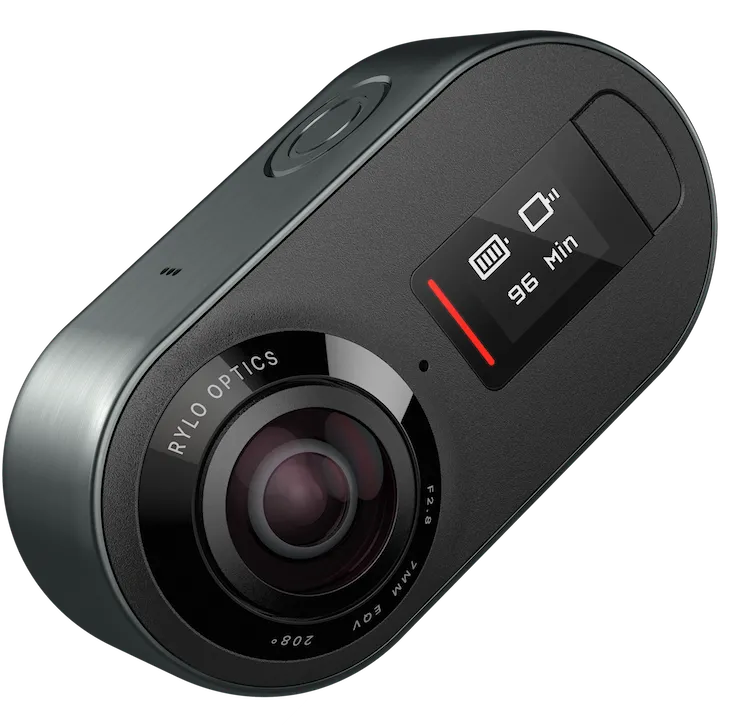
The main benefit of short names is that they’re physically small which can be advantageous in certain situations. For example, when we named Rylothey wanted to make sure that the name fit comfortably on the body and lens bezel of the camera they were building. This space limitation made shorter names a natural choice.
On the other side of the coin, short names present a lot of challenges. Aside from memorability concerns, short names are harder to register for trademark because everyone wants short names and shorter words are more widely used in English than, say, German. If a short name is a common word there will likely be a lot of search competition across many industries (think about the Flux example above). So even if the name doesn’t present a legal conflict, showing up on Google might prove difficult. Short names are also tough to find URLs for if you aren’t willing to append the name or use an alternate TLD.
3. Clear trademark
Under almost all circumstances you should register your name as a trademark. Anyone who has waded into the murky waters of trademark registration knows that hard and fast answers are few and far between. The trademark classes you choose to register in, as well as your description of Goods and Services, work to carve out a protectable niche. Knowing that there is always gray area, you should protect your mark to the best of your ability. One positive here is that more interesting and obscure names are often a lot easier to trademark. Their rarity begets protect-ability. Yet another practical reason for choosing a more interesting name.

It is possible, however, to take protect-ability and trademark search too far. Looking for something that poses zero conflicts is no reason to select a frankenstein name whose only purpose is to be registrable. If the name means nothing to anyone and doesn’t work for your marketing, what are you really protecting? How much more are you going to need to spend to reinforce the name for your audience? The other issue here is that none of us can look into the future and see if similar names will be registered. What is a clear field today might be a crowded party tomorrow, especially if you’re successful with what you’re building. So yes, you should always register and protect your trademark, but there’s little benefit to maximizing here and trying to find something flawlessly clear. This offers you limited additional protection against trademark trolls and bullies.
4. Pronounceable and spellable
Names that are easy to pronounce and spell feel accessible and familiar. They’re like that old hoodie deep in your closet that’s been there so long you don’t even think about it anymore. Sometimes this feeling is the desired effect with a name. Say you’re naming an old fashioned ice cream parlor or a product like Miro that’s all about making something feel like second nature. That familiarity can definitely be an attribute.
Focusing on names that are pronounceable and spell-able leads to two big issues. First, names that are easy to spell and pronounce tend to be very common. This typically leads to an uphill battle on trademark registration and URL acquisition. Familiar words are also hard to remember because we tend to run into them so often. We read them so effortlessly that they disappear from our memories just as easily. It’s like meeting someone named Chris or Sarah — there’s nothing wrong with either of these names. We just meet so many of them that the name goes in one ear and out the other.
The most important thing here is making sure you’re prioritizing spelling and pronunciation for the right reasons. Most often when we hear that this is a priority for a client it’s because they’re underestimating the intelligence of their audience. They think that if people run into a word they don’t know they’ll run away or worse, get angry that a smart company is talking down to them. There’s a difference between a name that people don’t immediately recognize and a name that feels like a vocabulary word. No one knows what Häagen-Dazs or Lululemon means but it doesn’t really feel like you’re supposed to.
5. Descriptive
A lot of people feel that names are supposed to accurately describe what something is. This is one way to go about naming. Whole Foods and Airbus do this to a certain extent although there’s a subtle hint of character somewhere in there. Descriptive names can help people out when they don’t know what they’re looking at. Really though, most descriptive names are applied when people know exactly what they’re looking at–be it a grocery store or an airplane. In most situations, context takes care of the job, freeing the name to do some more emotional heavy lifting.

The drawbacks to descriptive names are many. First, companies pivot and change what they do all the time. Nokia used to make toilet paper for goodness sakes. So if you’re attempting to closely tie your name to your business activities, how sure are you that your name is going to accurately describe your business in a decade? This is why you end up seeing companies with taglines like “The Water Store: Not just water! Coffee and soda too!” What a mess. The other big problem with descriptive names is that they’re almost always boring (making them hard to remember) and this makes your marketing job more difficult than it has to be. Descriptive names are also difficult to protect legally because competitors have a right to describe what they do, whether it’s your name or not.
Engaging
There are no drawbacks here. Unless you’re intentionally trying to avoid getting noticed, there is no reason not to have an engaging name. Being called A Hundred Monkeys, we get people knocking on our door all the time just because they want to see what happens behind a door that says “A Hundred Monkeys” on it. This is free publicity and you’d be a fool to turn it down.
Some might say that engaging or evocative names are tougher to categorize or understand. To this I say “perfect!” If a name is harder to categorize or understand, your brain spends more time with it. We have a very natural desire to categorize and when names defy easy categorization we’re forced to play with them until we can make some sense of it all. This aids memorability and leads to engagement–the two goals names are best suited to accomplish.

The big takeaway
Naming is a big game of give and take. Knowing what you’re after before you start looking at names puts you in a position to accurately assess the benefits and drawbacks of specific names. Do not turn this into a needle in a haystack exercise. This leads to names that try to do too much and end up being contorted into doing almost nothing at all. The good thing is that if you keep building your business and treating your customers well, your name will come to mean everything you want it to. Nike is no longer a reference to antiquity. It means Just Do It, and championship athletes and product innovation, and thousands of other things. Over time the name becomes the vessel in which all brand and product experience is held. Names are not static. Their meanings bend and shift along with your activities and the experiences of your customers. It is very hard to keep this top of mind when you’re looking at potential names. Be patient. All of the nuanced meaning will come. It just doesn’t exist in a six letter word on day one.